Highlights

Nutshell

Center for Railroad Photography and Art

Photo courtesy Norfolk Southern

North American Railroad History in a Nutshell, which started as a feature on railroadheritage.org, is now an expanded, printed publication. It is available as a membership benefit or you may purchase single copies.

Our Organization

The Center for Railroad Photography & Art is a nonprofit arts organization that preserves and presents significant images of railroading. This focus on visual representations sets the Center apart from most other historical and preservation organizations. It does not maintain its own museum space but instead collaborates with other institutions and scholars. It maintains an office in Madison, Wisconsin, and an archive at Lake Forest College in Illinois. The Center, incorporated in 1997 in Wisconsin, has received 501(c)3 status from the U.S. Internal Revenue Service. Its board of directors represents a broad range of interests and professions. Generous individual and institutional gifts make its programs possible. Support us with your tax-deductible gifts.

"Conversations" Conference

Photo by Henry Koshollek, M.A.

The Center's eighth "Conversations About Photography" conference will be held April 23-25, 2010, in Lake Forest, Illinois. Photos of the 2009 conference are on the conference page.

Railroad Heritage 22

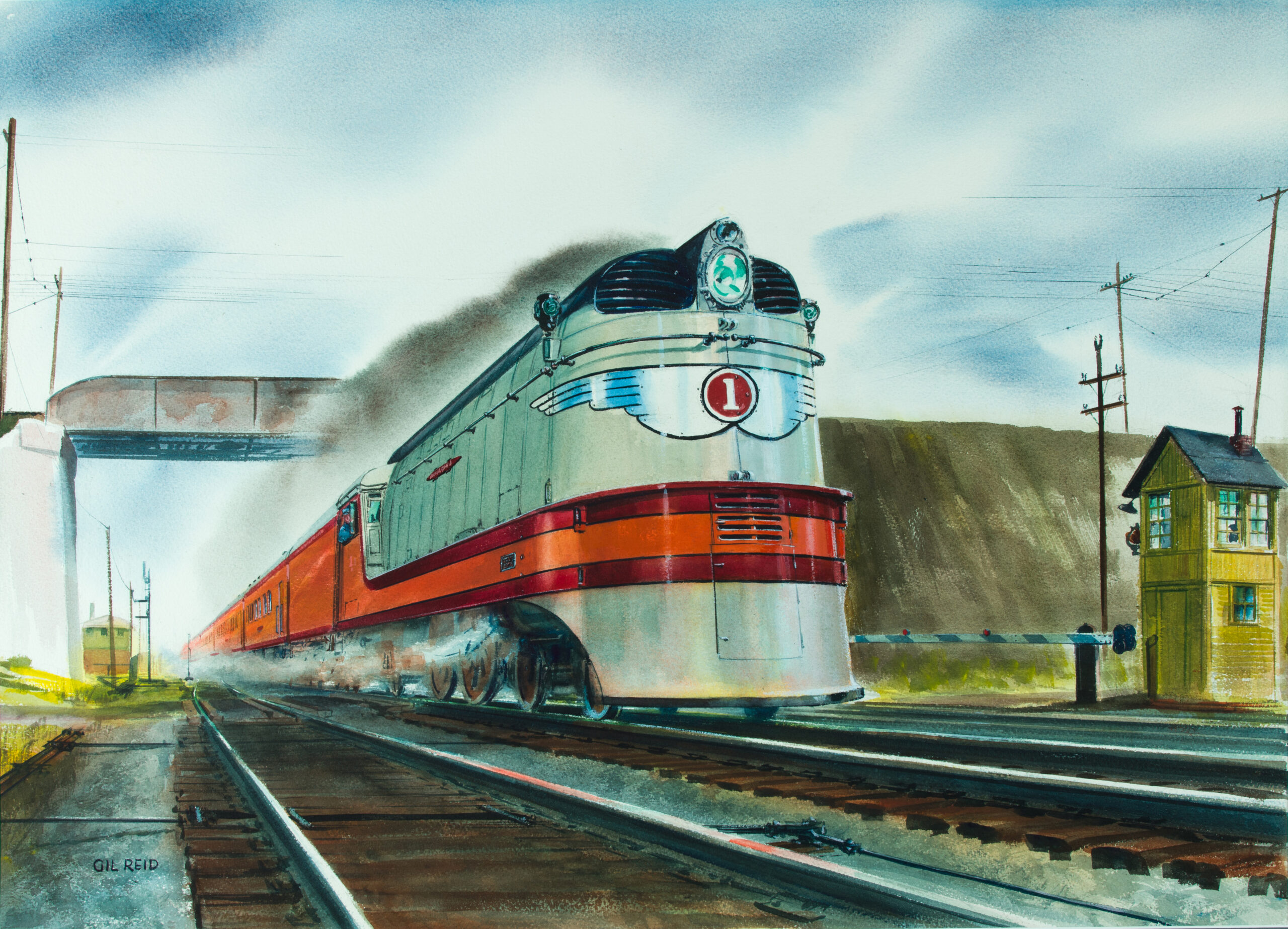
Railroad Heritage no. 22 showcases the winners of the annual Creative Photography Award and begins a series, “Faces of Railroading,” about Jack Delano and his portraits of people and railroads in preparation for an exhibition in Chicago. Other highlights of the journal include stories about the Center’s 2009 activities, the 2010 “Conversations about Photography” conference, and profiles of photographer Frank Barry and the designer of the Southern Pacific’s 1937 Daylight passenger train. Receive your copy of Railroad Heritage with your gift/subscription today.

Photography Awards

Creative Photography Award

Photo by Brandon Smith, 2010 winner.

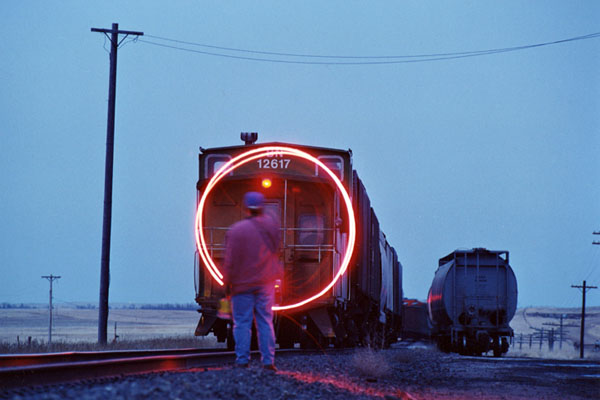
As a part of its commitment to excellence, the Center has established annual national awards for outstanding contributions to railroad imagery. See the 2010 winners.

Center for Railroad
Photography & Art

1914 Monroe St.
P.O. Box 259330
Madison, WI 53725-9330
(608) 251-5785 / Email Us!

Our Exhibits about Work

Jack Delano's photograph of Santa Fe car repairman Robert Hill at Topeka, Kansas, is included in the Center's Topeka exhibition.

The Center has several photography exhibits on display now. A common theme runs through them--showing the human aspect of railroading and telling the workers' stories. They are a part of the Center's three-year program, "Representations of Railroad Work, Past and Present," funded by the North American Railway Foundation. The program also features galleries and a bibliography. Exhibits are available for travel; for most, regional photographs can be added to tailor exhibits to local audiences.

"It's Work: 150 Years of Railroaders at Work" Continues at Topeka

The Center's exhibition about railroaders and railroad work is at the Great Overland Station, 701 North Kansas Avenue, in Topeka Kansas, through May 1, 2009. The historic station, built in 1927, is an ideal location for "A World Apart: 150 Years of Railroad Workers at Work." Union Pacific donated the station in 1998. After a redevelopment, the station reopened in 2004. The exhibit may be seen Tuesday through Saturday, 10 a.m. to 4 p.m.

While the center's exhibit is national in scope, it includes Topeka area views. Jack Delano, a photographer for a federal government agency, the Farm Security Administration-Office of War Information, made three photos at the Topeka Shops in 1943. They show Robert Hill (1892-1963); Walter Mitchell (1897-1967); and Harry Tostado, who lives in California. Two are by a Lawrence photographer, Robert P. Olmstead, including a view at Lawrence in 1949.

Appropriately, the photographs are on display in a railroad center. Shawnee County had 1,081 railroad employees in 2006, according to the Railroad Retirement Board.

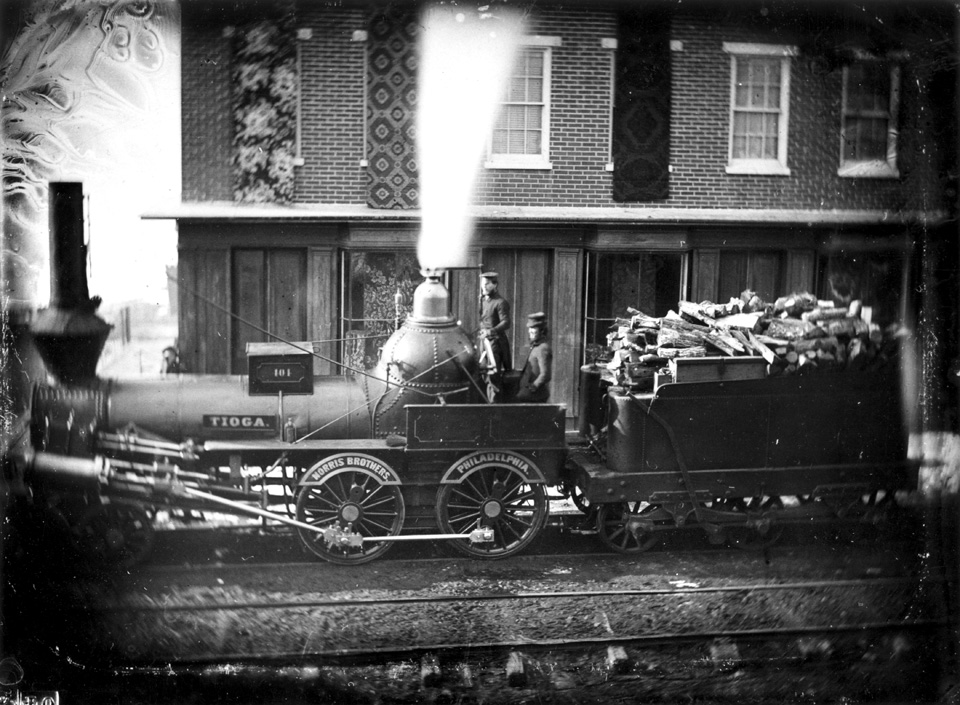
For this exhibit, the center presents about 37 photographs from across North America, beginning with a copy of a daguerreotype of the crew and locomotive Tioga, built for the Philadelphia & Columbia railroad in 1848. The images trace some of the changes in the railroad work environment, from the age of steam to the age of microchips. This exhibit highlights the human face of an industry that is dominated by machines and hardware. Technology has made the machines more powerful and the equipment more sophisticated, but behind technology are people who toil in an environment that is a world apart from most other industries. The exhibit had its origins in a three-year program, "Representations of Railroad Work," funded by the North American Railway Foundation.

Here are inventories for similiar, earlier exhibitions: "Railroads and Photography: 150 Years of Great Images" and "Snapshots of the Human Element of Railroading."

Lake Superior Railroad Museum Shows "It's Work: Still a World Apart"

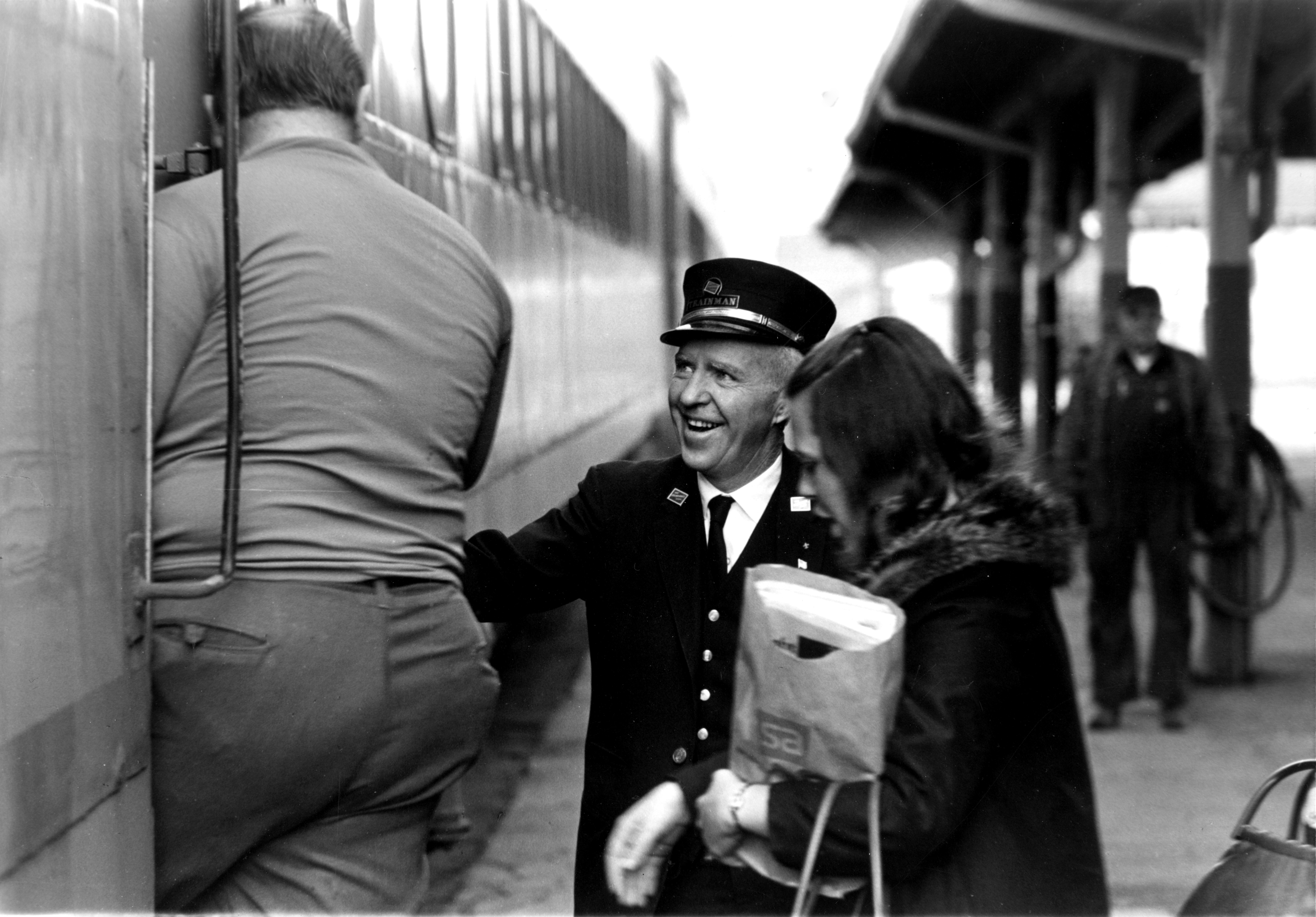
"Still a World Apart," a photographic exhibition by the Center for Railroad Photography & Art that looks at the human side of railroading, is appearing through August 31 at the Lake Superior Railroad Museum in the St. Louis County Heritage and Arts Center's Historic Union Depot in Duluth. The historic station, built in 1892, is an ideal location for the exhibition, whose subtitle is "Visual Profiles of Contemporary Railroaders." While the exhibit covers the nation, it includes Duluth-Superior area views: a Missabe ore dock worker in 1947, a Duluth & Northeastern crew cooking in the caboose in 1962, and John and Peter Lawson, a father-son Amtrak crew, with a passenger train in Superior in 1976.

In the exhibit, the Center recognizes Robert W. Downing, who as president (1971-73) and vice chairman and chief operating officer (1973-76) of the Burlington Northern had a major role in building and improving railroad access to the Powder River Basin coal mines. Downing, 94, lives in Spokane, Washington. He was trainmaster at Kelly Lake, Minnesota, in 1951-54, when the Great Northern in 1953 moved record tonnage on the iron range. He revisited the ore docks in 2005.

The images emphasize the American Midwest and West, where some railroaders run trains or maintain track in all weather and at all hours of the day and night, while others spend their entire job shift in front of computer screens. The railroad is like no other employer. A worker's life is defined by demanding work rules; irregular hours of service; and a host of labor, safety, and retirement laws that set the railroad apart from other industries. Even the U.S. Supreme Court, in a 1957 decision, observed that "the railroad world is like a state within a state." The workers themselves are the focus of these photographs, on and sometimes off the job. The images hint at personal stories--of careers, families, and relationships. The settings are varied, since the railroad touches every part of the America, from thriving cities to forgotten settlementst. While railroad employment numbers in the 21st century are greatly reduced from those of earlier decades, many workers continue to perform their duties in the time-honored railroad manner, ever mindful of the urgency behind the railroad's efficient and demanding flanged wheel on steel rail technology. As in the past, many feel the pressure to put their work before everything else in their lives.

This exhibit highlights the human face of an industry that is dominated by machines and hardware. Technology has made the machines more powerful, and the hardware more sophisticated, but behind them people toil in an environment that is still a world apart from most other industries. The exhibit had its origins in a three-year program, "Representations of Railroad Work," with funds provided by the North American Railway Foundation to the Center.

Faces of Railroading: Wisconsin

"Faces of Railroading and the Making of Madison and Dane County" looks at the historic role railroaders have played in this midwestern town, as they did in so many other communities. Special attention is given to railroader neighborhoods and their geographic proximity to the railroad yards. NARF and The Evjue Foundation, Madison, provided major support. Its first venue, June 8-28, 2006, was at the state capitol in Madison. The exhibit opened with a program June 8 and a reception courtesy of Trains magazine, Waukesha, Wis., and Kitchen Hearth Catering, Madison. Display followed at Mid-Continent Railway Historical Society, North Freedom, Wisconsin, through October 30, 2006, and at the Mineral Point (Wisconsin) Railroad Society's historic depot in 2007. It is now at RP's Pasta, 1133 East Wilson Street, Madison, 608-257-7216.

"Faces of Railroading" is on display at RP's Pasta in Madison. Photo by Henry A. Koshollek, M.A.

Many Hands: Representations of Railroad Workers

The exhibition was developed by the New York Transit Museum and curators John Gruber and Michael Zega of the Center, with support from the North American Railway Foundation, the New York City Department of Cultural Affairs, and the New York State Council on the Arts, a state agency. Focusing on the New York metropolitan region, "Many Hands" features Hal B. Fullerton, whose 19th century images along the Long Island Rail Road depict a long-forgotten landscape of American-type locomotives and stone arch viaducts; work portraits by social documentarian Lewis W. Hine, taken throughout the massive Penn Station improvements during the 1920s and 30s; Gordon Parks's views of railroad workers from the 1940s; and recent work by Frank English, who has chronicled Metro-North Railroad for the last 22 years, as well as others whose work has rarely been seen. Contemporary photographers represented include Pat Cashin, Gene Collora, John Fasulo, Joe Greenstein, George Hiotis, William D. Middleton, and Jim Shaughnessy. It was at the New York Transit Museum Grand Central Annex through October 29, 2006, and at the Long Island Railroad Museum in Greenport in 2007.

"Many Hands: Representations of Railroad Workers" was at Grand Central Terminal in 2006. Photo by Joshua McHugh